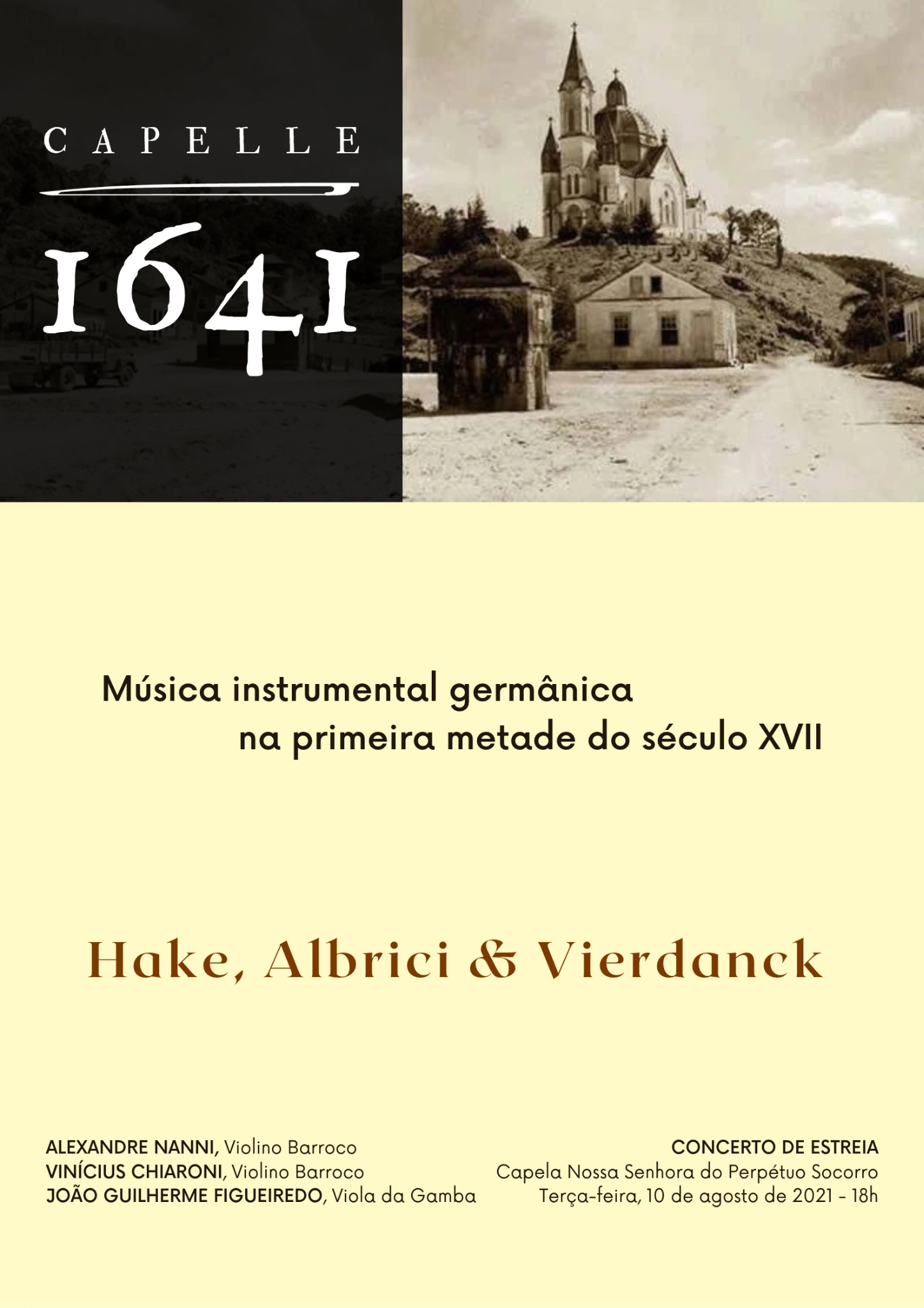
This concert marks the debut of Capelle 1641, an ensemble dedicated to researching and performing seventeenth-century music. The programme offers an overview of instrumental music produced in the German lands during the first half of the seventeenth century, a period of intense circulation of ideas, styles and musical practices among different regions of Europe.
The programme brings together works by Hans Hake (1628-1654), Johann Vierdanck (1605-1646) and Vincenzo Albrici (1631-1696), composers whose output attests to the diversity of instrumental idioms cultivated in that context. Through dances, capriccios and sinfonias, the repertoire reveals a dialogue between the German contrapuntal tradition and Italian influences, especially evident in the growing independence of instrumental styles — as observed by Athanasius Kircher (1602-1680), a Jesuit from Thuringia based in Rome, in his treatise Musurgia Universalis (Universal Music) (1650).
Performed on instruments of historical design, these works allow us to revisit some of the sounds that shaped the musical life of the period, revealing the richness of a repertoire still seldom heard in concert halls. The inaugural programme of Capelle 1641 thus offers an encounter with this musical world through rarely performed works in their full historical, stylistic and sonic dimensions.
Programme
Hans HAKE (1628–1654) — Pavana XXXIII
Johann VIERDANCK (1605–1646) — Capriccio à 2 violini
Vincenzo ALBRICI (1631–1696) — Sinfonia à 3
Johann VIERDANCK (1605–1646) — Capriccio 25 à 2 violini e viola da gamba
Performers
- ALEXANDRE NANNI - Violin
- VINI CHIARONI - Violin
- JOÃO GUILHERME FIGUEIREDO - Viola da gamba