
Jesus is born! Christmas, 1645-1685
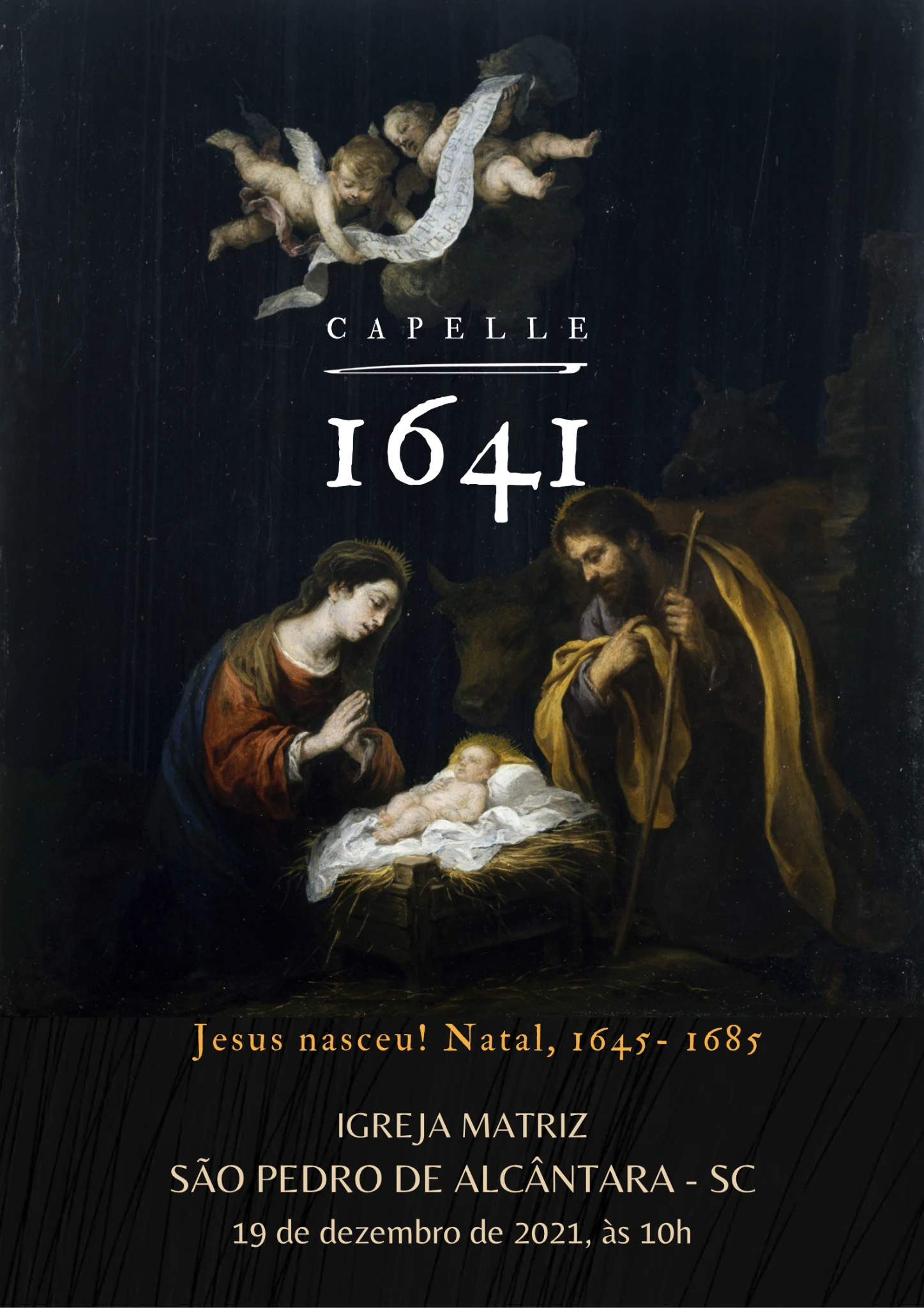
The birth of Jesus is, without doubt, one of the most emblematic dates of the year. Celebrations take place across the globe in many different forms. The seventeenth century was no different. In the Holy Roman Empire, encompassing territories that today form Germany, Austria, Switzerland and parts of Italy, Denmark, Belgium and the Netherlands, celebrations took many forms and, in the great majority of cases, music served as a unifying vehicle. This allowed the dramatic character of the event and the biblical word to reach higher levels of dissemination and understanding. Music was said to bring human beings closer to the divine. Across such a vast geography, it is hardly surprising that different musical styles came to flourish in specific places.
For this concert, we therefore selected sacred compositions performed in the region of present-day Germany between 1645 and 1685. It was no easy task. The challenge involved bringing together contemporary styles within a single programme, acknowledging the historical value of period instruments that have been out of common use for more than 350 years, such as the cornett and viola da gamba, while also reconciling these demands with the availability of musicians active in Brazil. Seeking an interpretation that is alive while remaining faithful to seventeenth-century musical practices, Capelle 1641 presents musical perspectives grounded in research into the historical, geopolitical, sociocultural and artistic context.
Daniel BOLLIUS (c. 1590-c. 1642) was a German composer, organist and Kapellmeister. From his oratorio on the birth of Saint John the Baptist, we present the opening sinfonia. Heinrich SCHÜTZ (1585-1672) is regarded as one of the leading figures of German music and one of the principal influences on subsequent generations; he was a prolific composer and Kapellmeister. From Buxtehude, we present three vocal pieces with instrumental accompaniment: 1. Paratum cor meum; 2. Singet dem Herren ein neues Lied; 3. Der Herr ist meine Stärke. Johann ROSENMÜLLER (1617-1684) was a German musician strongly influenced by French and Italian styles. He composed primarily instrumental works, including his collection Studenten-Music, from which we perform Suite No. 1. Dietrich BUXTEHUDE (1637-1707) was a German-Danish composer who, like Schütz, played an extremely important role in the German music of his time and was among the major influences on Johann Sebastian Bach. We present three of his vocal works, also accompanied by the instrumental ensemble: 1. Herr, wenn ich nur Dich hab; 2. Quemadmodum desiderat cervus ad fontes aquarum; 3. Also hat Gott die Welt geliebet.
Programme
Daniel BOLLIUS (c. 1590-c. 1642) — Representatio harmonica conceptionis et nativitatis S. Joannis Baptistae: Prima Symphonia
Heinrich SCHÜTZ (1585-1672) — Paratum cor meum; Singet dem Herren ein neues Lied; Der Herr ist meine Stärke
Johann ROSENMÜLLER (1617-1684) — Studenten-Music: Suite I: Paduan; Alemanda; Courant adagio; Courant allegro; Alemanda; Courant; Ballo; Sarabanda
Dietrich BUXTEHUDE (1637-1707) — Herr, wenn ich nur Dich hab; Quemadmodum desiderat cervus; Also hat Gott die Welt geliebet
Performers
- LUDMILLA THOMPSON - Soprano
- GUSTAVO GARGIULO - Cornett
- VICTOR TAMARINDO - Violin
- ALEXANDRE NANNI - Violin
- VINI CHIARONI - Violin and viola da braccio
- JOÃO GUILHERME FIGUEIREDO - Viola da gamba
- ROGER BURMESTER - Archlute