German Sacred Cantatas
Tobias Zeutschner (1621-1675) was born in Neurode, in the County of Glatz, a historical region of Silesia then associated with the Bohemian Crown, into a family with an academic tradition. He devoted his life to sacred music and left an important musical legacy. He became an organist in Oels in 1643, and subsequently worked at the churches of St Bernardine and St Mary Magdalene in Breslau. His reputation grew with the collection of sacred hymns Musicalische Kirchen- und Haus-Freude (1670) [“Musical Joy for Church and Home”], whose works circulated across German-speaking regions. His compositions, intended for both religious and domestic settings, reflect the expressive variety of seventeenth-century German sacred music.
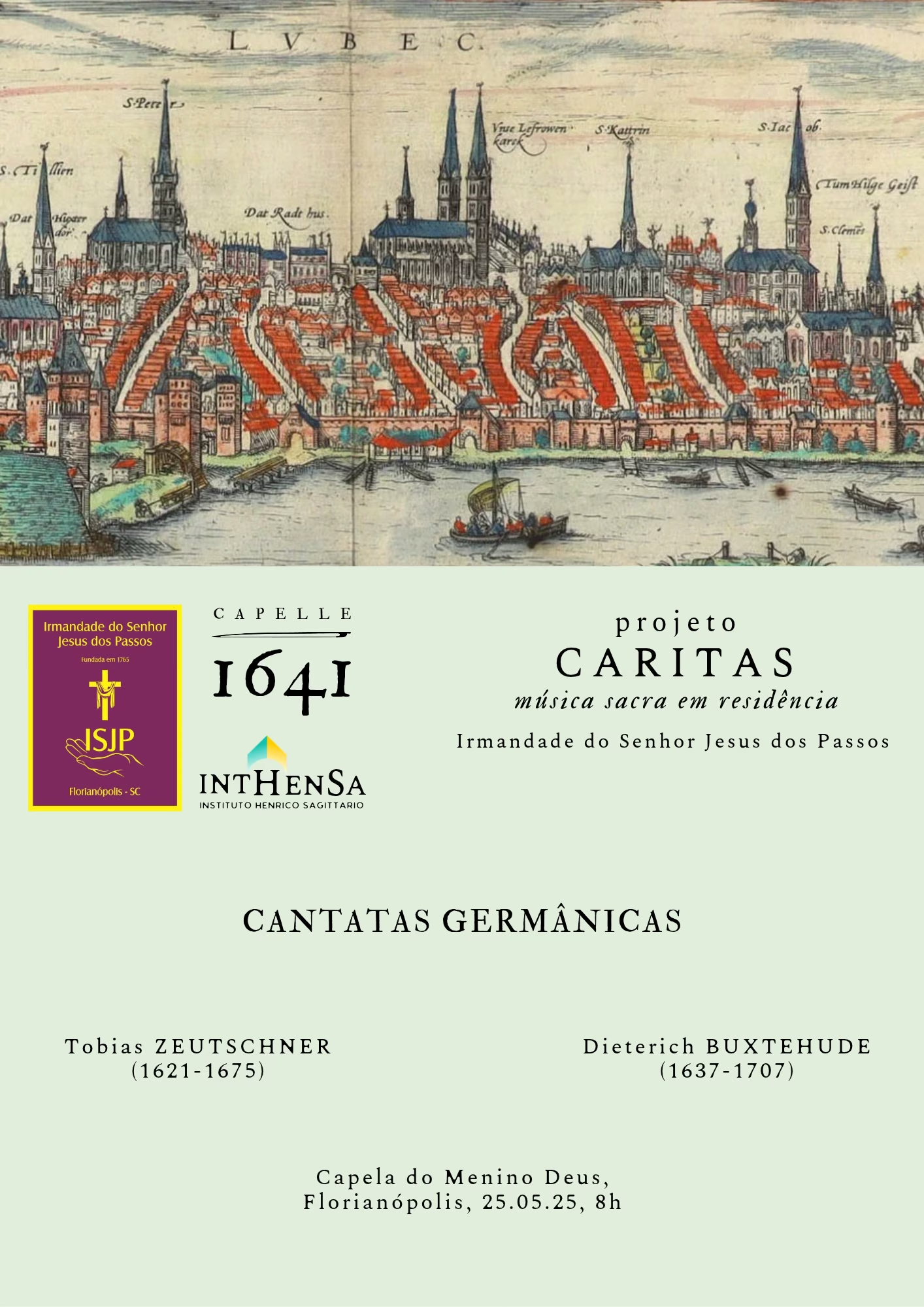
Dieterich Buxtehude (1637-1707), probably born in Helsingborg in Scania, then part of the Kingdom of Denmark, was one of the leading sacred-music composers of his time. The son of an organist, he followed the same profession. In 1668 he became organist at the Marienkirche in Lübeck, where he married his predecessor's daughter. In Lübeck, he entered his most productive period, continuing and expanding the Abendmusiken [“evening music”], concerts that became an important part of the city's religious and cultural life. His reputation as an organist attracted young musicians, most famously Johann Sebastian Bach (1685-1750), who extended his stay in Lübeck to approximately four months. His influence reached later generations and established him as one of the major musical figures of the seventeenth century.
Programme
Tobias ZEUTSCHNER (1621-1675) — Ecce nunc benedicite Domino
Dieterich BUXTEHUDE (1637-1707) — Quemadmodum desiderat cervus
Performers
- IGOR VIVANCO - Countertenor
- VINI CHIARONI - Violin
- ALEXANDRE NANNI - Violin
- LUCAS ROPELATO - Violone da gamba
- ROGER BURMESTER - Theorbo