Spiritual Symphonies
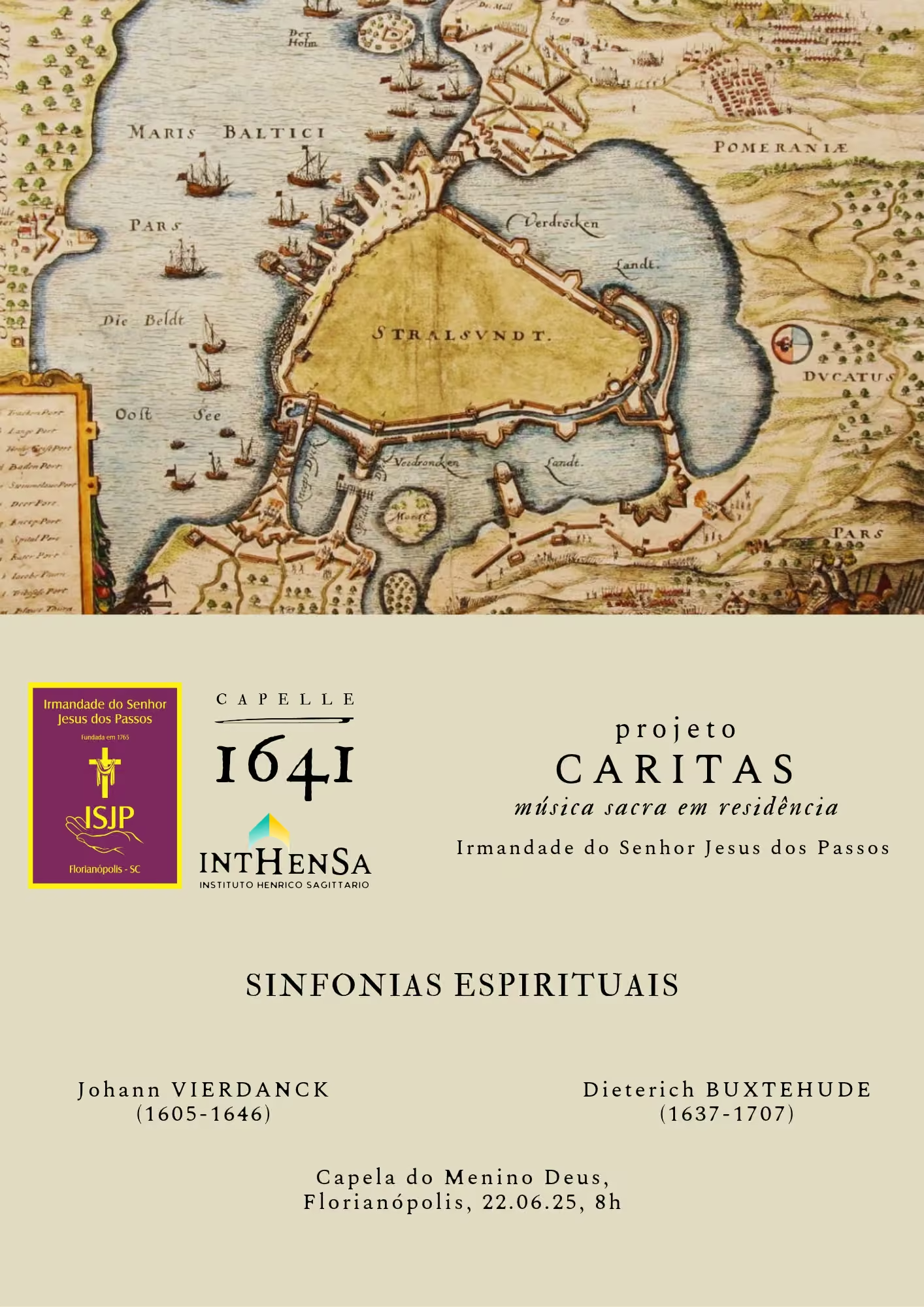
Johann Vierdanck (1605-1646) received his musical training at the Dresden court, in a milieu associated with Heinrich Schütz (1585-1672). A violinist, cornettist, organist and composer, he visited musical centres including Copenhagen and Lübeck before settling in Stralsund, a Baltic port city where he became organist at the Marienkirche in 1635. His output includes instrumental music and sacred concertos, notably the Geistliche Concerten (1641 and 1643), in which expressive instrumental writing supports the musical presentation of sacred texts. In Lobe den Herren, meine Seele, praise is voiced as an affirmation of faith and gratitude in words drawn from Psalm 146.
Dieterich Buxtehude (1637-1707) was probably born in Helsingborg in Scania, then part of the Kingdom of Denmark. The son of an organist, he pursued the same profession in Helsingborg and Helsingør before becoming organist at Lübeck's Marienkirche in 1668. There he distinguished himself through sacred vocal works, organ and instrumental music, and the development of the concert tradition known as the Abendmusiken. In Herr, wenn ich nur dich hab, based on Psalm 73, trust in God is expressed through intimate vocal writing and a dialogue with the instruments. Vierdanck's and Buxtehude's works reveal, at different points in the seventeenth century, the close relationship between words, affections and musical expression in the German tradition.
Programme
Dieterich BUXTEHUDE (1637-1707) — Herr, wenn ich nur dich hab
Johann VIERDANCK (1605-1646) — Lobe den Herren, meine Seele
Performers
- MARÍLIA OLIVEIRA - Soprano
- VINI CHIARONI - Violin
- ALEXANDRE NANNI - Violin
- UMBERTO GRILLO - Viola da braccio
- LUCAS ROPELATO - Violone
- MARCOS HOLLER - Organ