
In his Encomium of Helen (fifth century BC), Gorgias of Leontini (c. 485 BC - c. 380 BC) ascribed an extraordinary power to rhetoric: the ability to awaken affections in the human soul and, more remarkably still, to replace one affection with another. Through words, one could dispel fear, drive away sorrow, arouse joy or awaken compassion. In the seventeenth century, this conception of the persuasive power of discourse found a new expression in music, which was likewise understood as an art of moving the affections, capable of acting upon thought, soul and body. In his Musurgia universalis (Universal Art of Music, 1650), the Jesuit Athanasius Kircher (1602-1680) sought to explain how sonic movements could produce changes in the mind and body.
In the musical tradition of this period, musica theorica, musica poetica and musica practica brought together rational knowledge, composition and performance. Musica poetica shaped musical discourse according to grammatical, syntactical and rhetorical principles, while musica practica, through actio, mobilised the resources of performance to lend persuasive force to the sounding discourse. Composition and performance thus served a common purpose: to impress affections upon the listener.
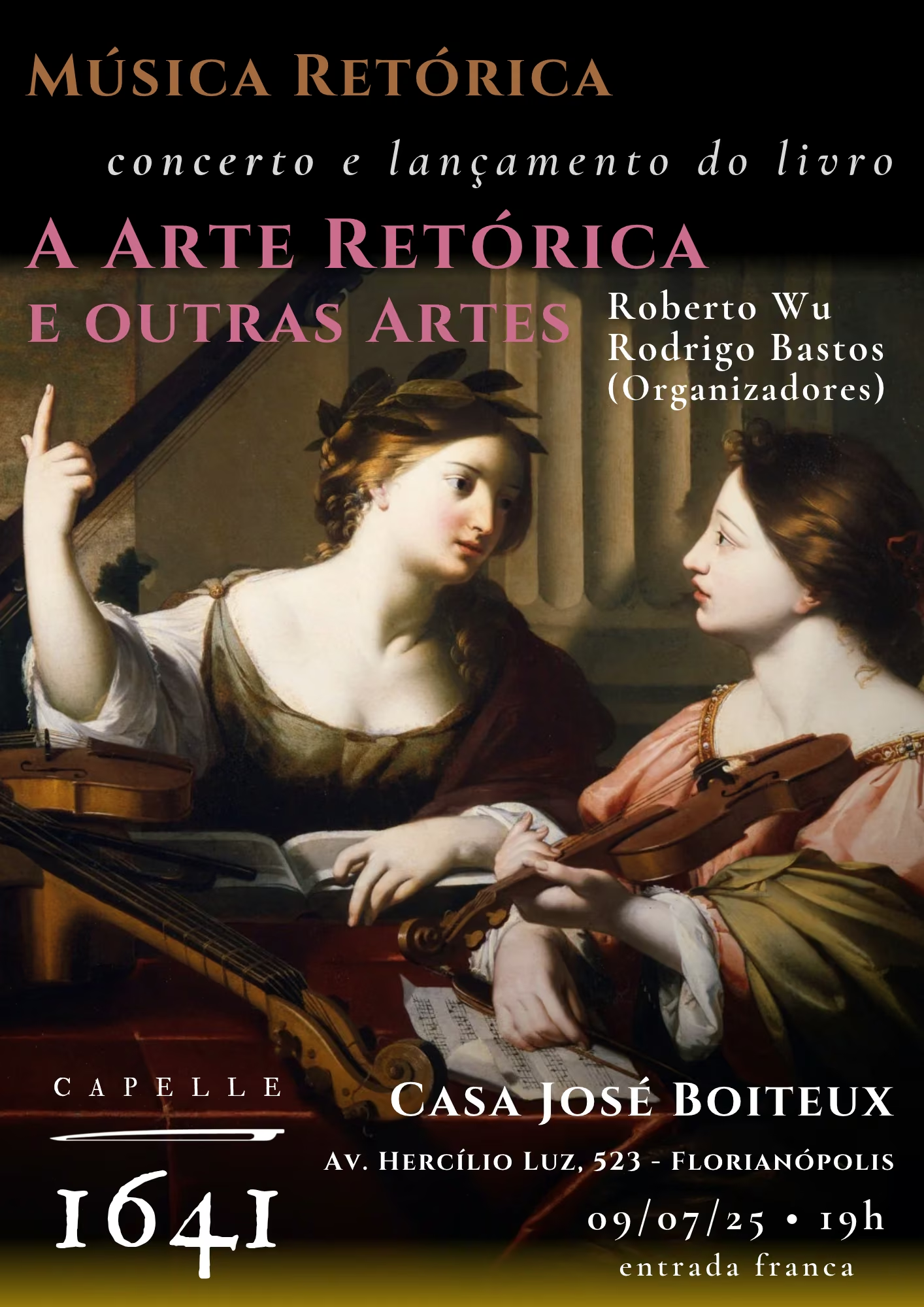
The Musical Rhetoric programme explores the relations between theory, composition and musical practice as complementary dimensions of a single art of persuasion. Theory, cultivated by philosophers and theologians, supported a cosmological and Apollonian conception of music founded upon number, proportion, order and universal harmony; composition organised this thought into effective musical discourse; and performance brought it into action, lending it eloquence. Within this system, instrumental virtuosity helped communicate affections even in the absence of verbal text, demonstrating music's capacity to constitute rhetorical discourse through its own means.
Programme
Heinrich Ignaz Franz von BIBER (1644-1704) — Harmonia artificioso-ariosa, Partia V
Heinrich Ignaz Franz von BIBER (1644-1704) — Rosenkranz-Sonate X, Die Kreuzigung
Anonymous, Holy Roman Empire (Rost Codex, c. 1682-1688) — Sonata III
Johann Heinrich SCHMELZER (c. 1620-1680) — Sonata X, Polnische Sackpfeifen
Performers
- LUIZ HENRIQUE FIAMINGHI - Violin
- VINI CHIARONI - Violin
- LUCAS ROPELATO - Violone da gamba
- MARCOS HOLLER - Organ